Designing Outdoor Spaces For Homes Around Mission Bay
July 16, 2026
July 16, 2026
If you live near Mission Bay, your outdoor space does a lot more than add curb appeal. It often serves as your landing zone after a paddle, your place to catch the breeze on a mild afternoon, and your go-to spot for dinner when the weather cooperates, which is often. When you design it well, you can make everyday coastal living easier, cleaner, and more enjoyable. Let’s dive in.
Mission Bay is not just another San Diego neighborhood with nice weather. Mission Bay Park spans 4,235 acres, includes 27 miles of shoreline and 19 sandy beaches, and draws an estimated 15 million visits each year. With boating, biking, swimming, beach days, and other water-focused recreation woven into daily life, homes here often function as active coastal basecamps.
That lifestyle changes what outdoor space needs to do for you. A patio or deck near Mission Bay should not only look inviting, but also handle wet gear, sand, wind, and changing temperatures. In this setting, the best design choices are usually the ones that combine comfort with flexibility.
Mission Bay’s climate is mild, but it is not static. NOAA found that from May through October, the coastal zone has a median daily high of 76.3°F compared with 83.0°F inland. At the same time, marine-layer cloudiness, low fog, gusty westerly winds, and occasional hot Santa Ana conditions can all affect how your outdoor space feels from one day to the next.
That means a design that only works in perfect weather may end up underused. Your goal should be to create an outdoor area that feels comfortable on a gray morning, a bright afternoon, and a breezy evening. Flexible features tend to perform better than rigid ones in this kind of coastal environment.
In Mission Bay, shade matters, but airflow matters too. Because coastal conditions can shift quickly from overcast to sunny and from calm to breezy, fully enclosing an outdoor area may make it feel stuffy or disconnected from the setting.
Instead, think about options that can adapt through the day, such as:
These choices can help you stay comfortable without shutting out the breeze that makes coastal living so appealing.
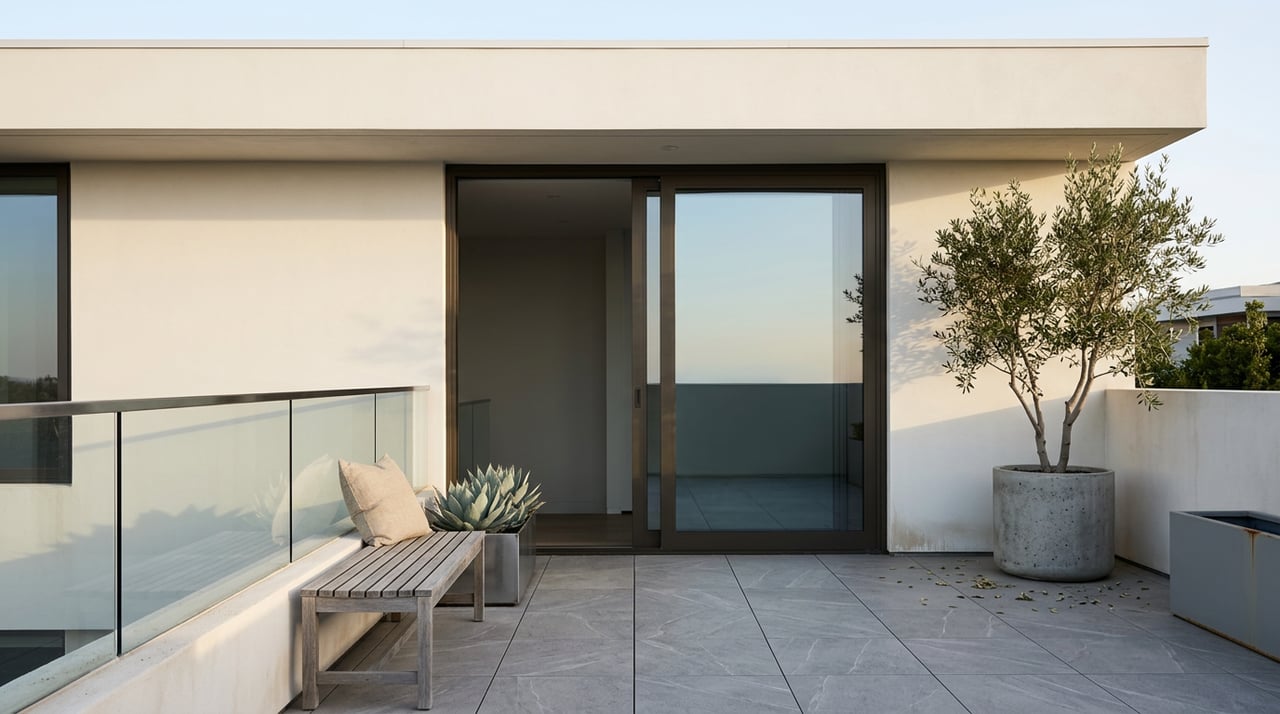
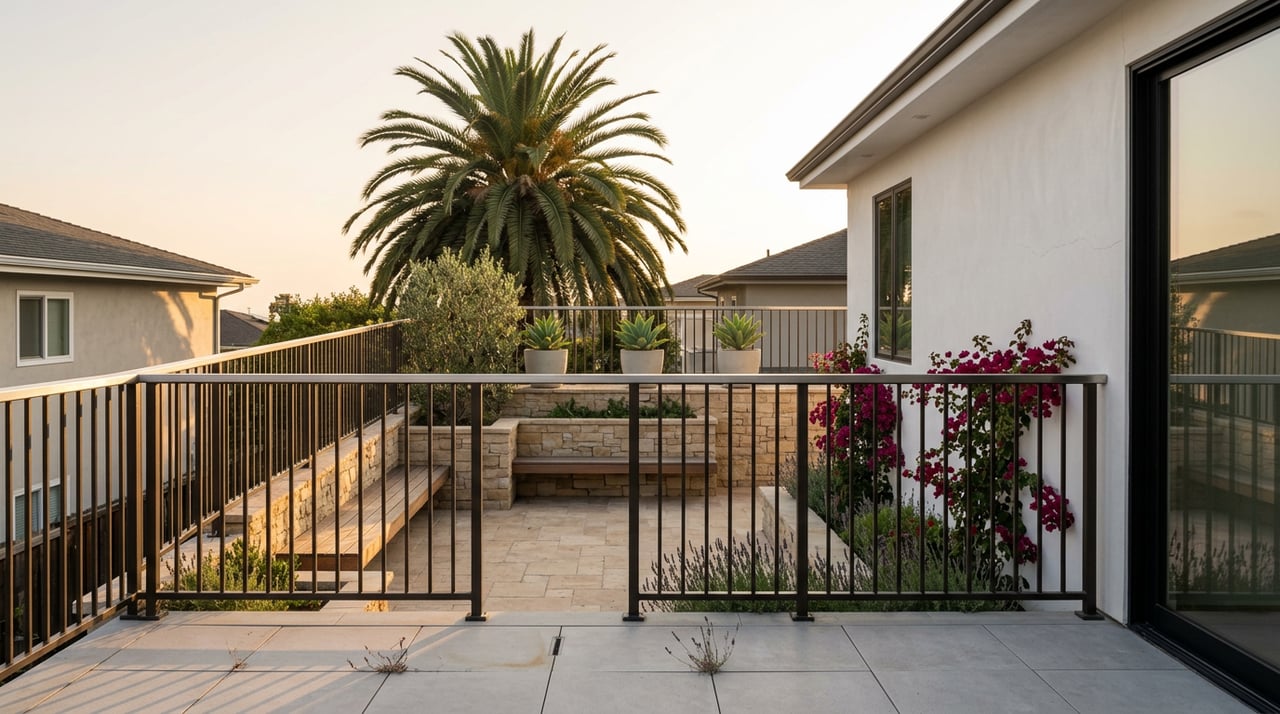
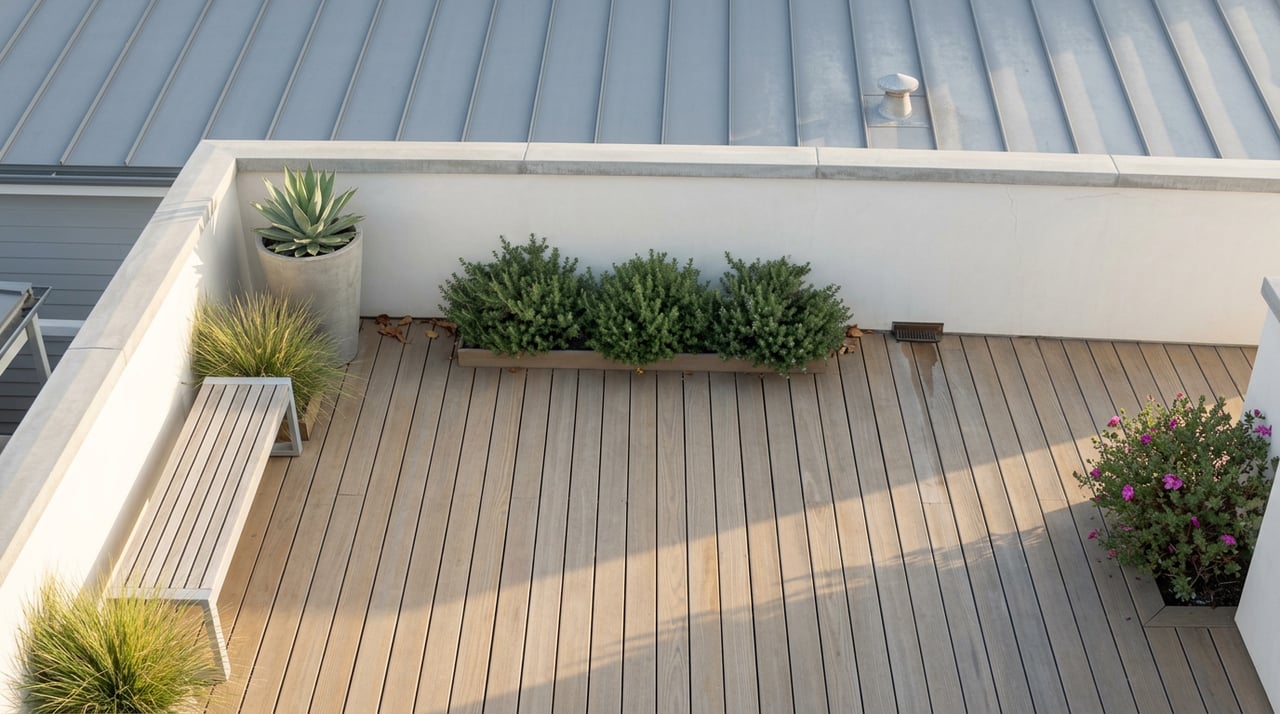
Roof decks can be a strong feature for homes around Mission Bay, but they need careful planning. Elevated spaces are often more exposed to wind and sun, which means they can feel great one day and harsh the next if they are not designed with comfort in mind.
A roof deck usually works better when you include adjustable shade, sturdy seating, and some privacy planning. The more usable it feels throughout the day, the more value it adds to your everyday routine. For many coastal properties, the difference between a nice idea and a truly functional space comes down to weather responsiveness.
One of the smartest ways to design outdoor space in Mission Bay is to start with how you actually live. With easy access to beaches, paths, and water recreation, many homes need practical support zones as much as they need entertaining areas.
If boards, bikes, towels, coolers, or life jackets are part of your routine, your exterior layout should account for them from the start. That helps reduce mess inside the home and makes your space feel more intentional.
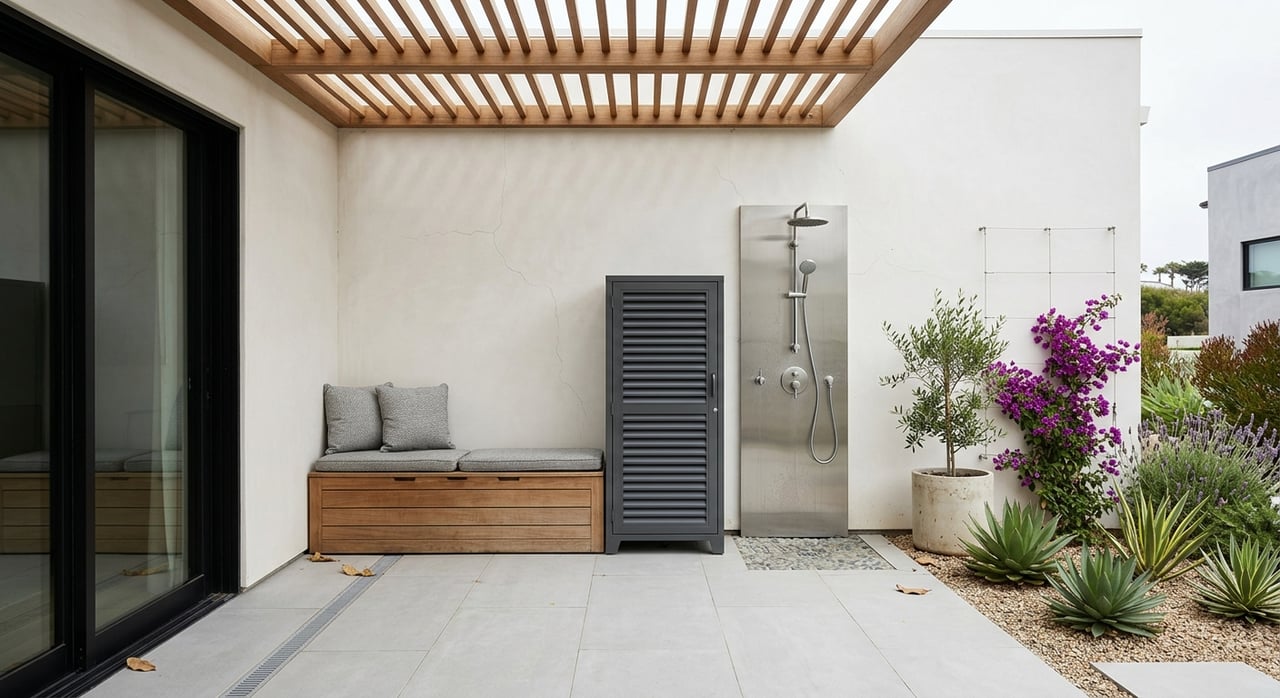
Outdoor design works harder when it includes a dedicated place to park, rinse, and store gear. For homes near Mission Bay, that may be one of the most useful upgrades you can make.
A good setup might include:
These features do not need to be flashy to be valuable. They simply make it easier to enjoy the bay without dragging the entire day back through the house.
Storage should not feel like an afterthought. In a coastal home, it often works best when it is integrated into the outdoor room itself.
That can mean a bench that conceals beach gear, a side-yard cabinet for paddles and folding chairs, or an entry transition that helps separate wet items from your main living space. In practical terms, the less visible clutter you have, the more polished and relaxed your outdoor area will feel.
Near the bay, exposed materials take more wear than they might in an inland setting. UC IPM notes that coastal sites exposed to ocean spray are common locations for salt damage to plants. That same coastal exposure can also be hard on finishes and hardware.
For that reason, material selection should focus on durability as much as style. Easy-to-clean finishes and corrosion-resistant details are often a better fit than materials that require frequent repainting or replacement.
Small construction details matter in coastal settings. The City of San Diego’s patio-cover guidance specifies hot-dipped galvanized or stainless-steel fasteners when framing hardware is used with preservative-treated wood, and it also requires Class A-listed roof covering assemblies for patio covers.
For you as a homeowner, the practical takeaway is simple. If you are improving a patio cover or other exterior structure, choose materials and hardware intended for coastal exposure. Those decisions can support longer performance and lower upkeep over time.
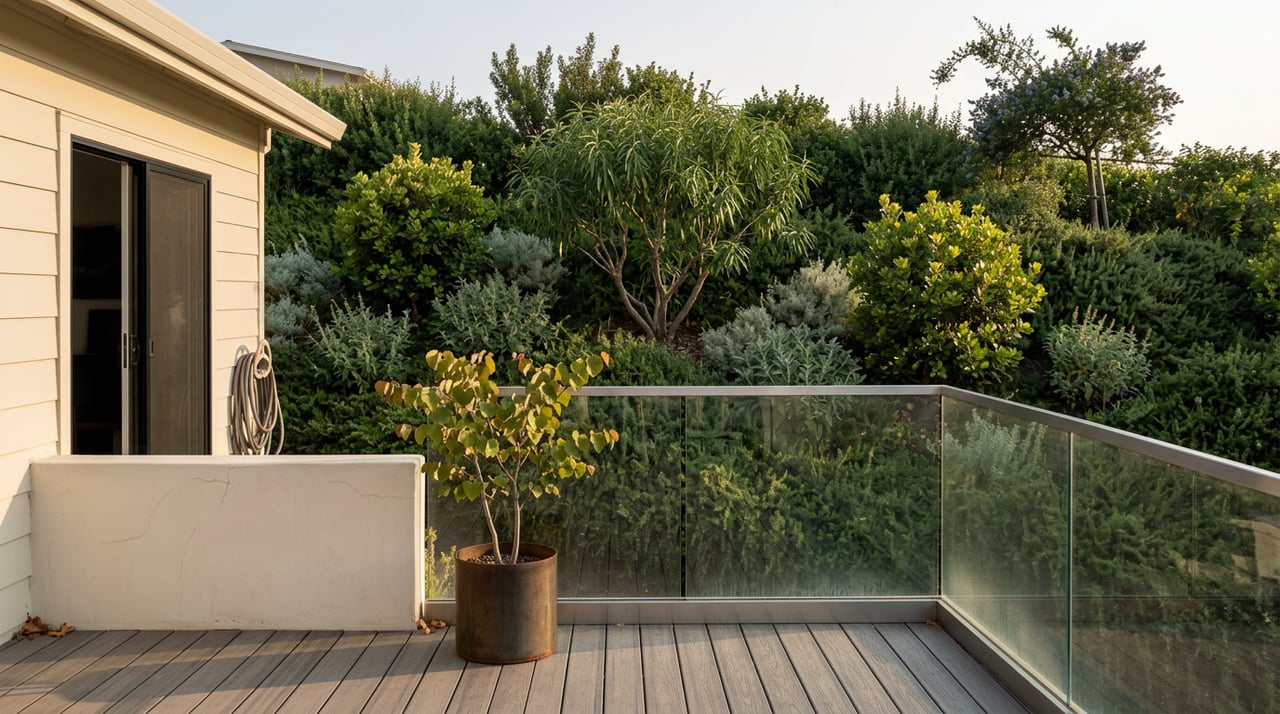
Low-maintenance landscaping in Mission Bay does not have to mean stripping everything down. In many cases, it means using a smaller and better-managed planting palette that fits the site, uses water more efficiently, and holds up better in coastal conditions.
That approach aligns with both local conditions and statewide landscape guidance. It can also make your yard easier to maintain while keeping it visually appealing.
UCANR notes that landscape irrigation accounts for roughly 50% of residential water use statewide, though in some coastal communities the share may be closer to 30%. It also reports that established trees, shrubs, and groundcovers can perform acceptably with about 40% to 60% of the water needed for a typical lawn.
That makes large turf areas worth reconsidering, especially if they are lightly used. A yard with less grass and more site-appropriate planting can often give you a cleaner look and lower water demand at the same time.
Not every plant that seems right for California is right for your property. UCANR explains that some native plants come from cooler, moister coastal habitats and may still need summer irrigation or extra care if conditions are warmer or drier than expected.
In other words, plant selection should be site-specific. Sun exposure, wind, salt, and irrigation layout all matter. A thoughtful plan usually performs better than a broad “low-water” label.
The City of San Diego has year-round mandatory water-use restrictions that directly affect landscape planning. Residential landscapes may only be watered before 10 a.m. or after 6 p.m., watering is prohibited during and within 48 hours after measurable rainfall, and irrigation must not create runoff onto adjacent property, walkways, roadways, parking areas, or structures.
That makes efficient irrigation and drainage part of good design, not just maintenance. If your layout encourages overspray or standing water, it may create problems you could have avoided early on.
Drainage may not be the most exciting part of an outdoor project, but it has a major impact on long-term usability. Covered patios, deck-adjacent surfaces, and hose-down areas all need a plan for where water goes after rain or cleaning.
The City of San Diego’s patio-cover bulletin requires a minimum roof slope of 1/4 inch in 12 inches for drainage. That is a helpful reminder that exterior spaces should shed water cleanly rather than trap it.
Even in a mild coastal climate, water shows up in more ways than rainfall. You may be rinsing off boards, washing down hardscape, or cleaning sandy items after a beach day.
When you plan hardscape and irrigation, think about how that water moves across the property. Clean drainage, controlled runoff, and well-placed wash zones can protect both the function and appearance of your outdoor space.
In Mission Bay, some outdoor upgrades that seem simple can become more complex once permit rules and coastal overlays are involved. The City of San Diego says homeowners generally need permits before constructing, expanding, altering, renovating, relocating, demolishing, or changing the use of a structure.
That is especially important if you are thinking about patio covers, decks, roof-level additions, or projects on a site with coastal or environmental constraints. Early verification can save time, money, and redesign effort later.
The city’s permit summary says patio covers may be exempt only when they are 300 square feet or less, do not encroach into a setback, and are 12 feet or less above grade. It also notes that patio covers are exempt unless the property is in the Coastal Overlay Zone or a Planned Development.
Decks may be exempt only if they are under 200 square feet, 30 inches or less above grade, and do not serve as the exit door. Those thresholds matter because many seemingly modest ideas can cross them quickly.
City zoning guidance states that a project in the Coastal Overlay Zone may need a Coastal Development Permit before a construction permit is issued. The Coastal Height Limitation Overlay Zone also limits buildings and structures to 30 feet.
For homes around Mission Bay, that makes elevated outdoor additions especially important to evaluate early. If your project also involves grading or work near environmentally sensitive lands, coastal beaches, coastal bluffs, or Special Flood Hazard Areas, additional approvals may be needed.
The best outdoor spaces around Mission Bay are usually the ones that feel easy to use. They respond to weather, support the way you actually spend time near the bay, and hold up with less stress over time. That is true whether you are improving your home for your own enjoyment or thinking ahead to what future buyers may appreciate.
For sellers, outdoor design can also help shape how a property is experienced during marketing. A space that feels clean, purposeful, and ready for coastal living often tells a stronger story than one that is attractive but impractical.
If you are weighing updates to a Mission Bay property, the right guidance can help you focus on improvements that fit the location, the site, and the way buyers respond to coastal homes. The Chris Love Team brings deep local perspective and hands-on insight into how Mission Bay properties live, show, and perform in the market.
Stay up to date on the latest real estate trends.