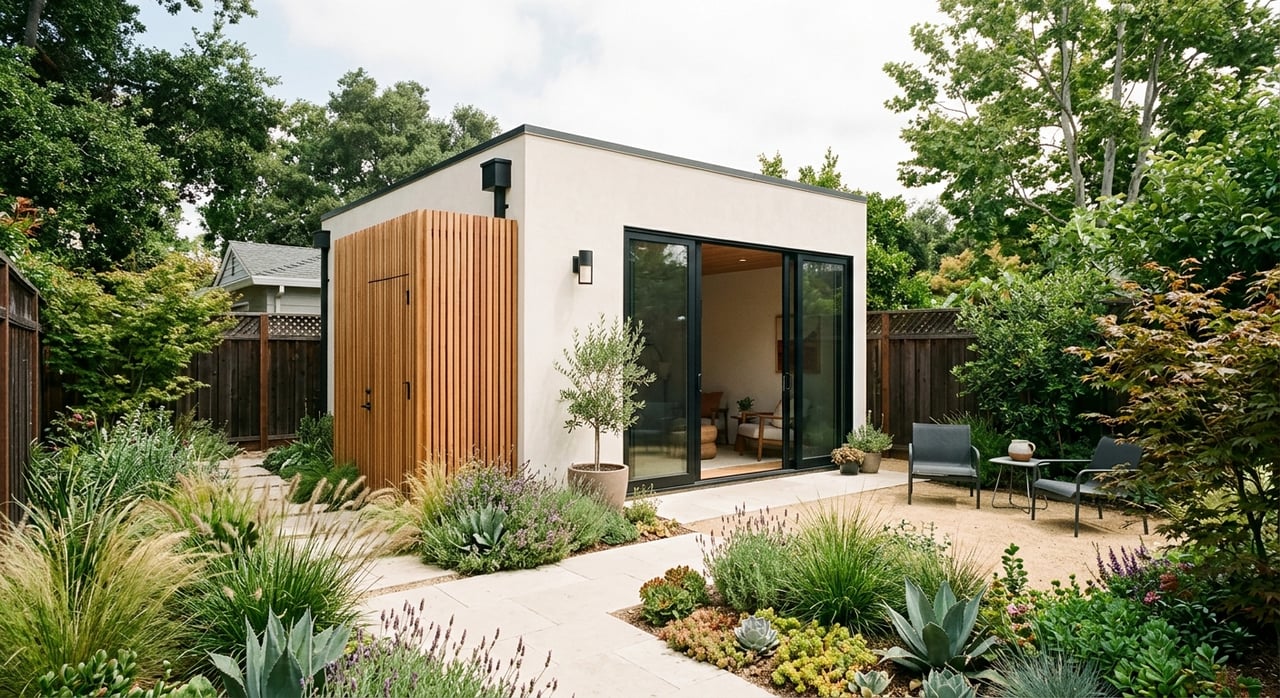
Guidelines for Building an ADU in Bay Ho & Clairemont
April 23, 2026
April 23, 2026
If you’ve looked around Bay Ho or Clairemont and wondered whether your lot could support an ADU, you’re not alone. Many owners see the potential for extra living space, long-term rental income, or added flexibility, but the rules, site limits, and costs can feel hard to sort through. The good news is that with the right planning, an ADU can be a practical value-add in this part of San Diego. Let’s dive in.
In Bay Ho and Clairemont, ADU planning is especially site-specific. This area includes many homes built in the 1950s and 1960s, along with curving streets, canyon edges, hillside conditions, and lots that vary more than they may seem at first glance. According to the City of San Diego’s Clairemont community information, that physical setting is a major reason careful parcel-by-parcel planning matters.
For many owners, an ADU is not just about adding square footage. It can create room for extended household needs, provide a longer-term rental option, and potentially support property value over time. The San Diego Housing Commission also notes that ADUs can help owners build household wealth through property value and rental income.
For single-family lots under the City’s current framework, you may be able to have one JADU, one converted ADU, and one new detached or attached ADU. The City updated these rules effective Aug. 22, 2025 outside the Coastal Zone and later summarized them in its January 2026 regulatory update. You can review that summary through the City’s development services regulatory updates.
It is also important to understand how these units can be used. ADUs and JADUs must be rented for periods longer than 30 days, so they are not allowed as short-term rental units under current city guidance.
A JADU, or junior accessory dwelling unit, is the smaller option. It must be located within the primary home or an attached garage, and it needs its own exterior access plus an efficiency kitchen.
A standard ADU is usually the more familiar option for owners considering a garage conversion, attached addition, or detached backyard unit. The City’s ADU information bulletin is the key source for these definitions and development standards.
In Bay Ho and Clairemont, lot layout can have a big impact on what makes sense. Some parcels are flatter and easier to work with, while others are sloped, close to canyon areas, or limited by existing driveway and garage placement.
That is why a garage conversion or compact detached unit may be more realistic than a larger addition on some sites. The older Clairemont planning context also emphasizes clustering development on flatter hillside areas and minimizing grading, which supports a more careful, site-driven approach rather than assuming every lot can handle the same ADU plan.
Parking is one of the biggest points of confusion. Under current city guidance, ADUs outside the Coastal Overlay Zone do not require parking, and JADUs require no parking at all.
That said, parking still matters in practice. Parts of Clairemont have had recurring parking shortages, especially near busier corridors, and your driveway layout, curb cut, and on-site circulation may still affect the project. The City notes that if a project creates a noncompliant driveway curb, that curb must be closed to the City’s satisfaction.
If your property is inside the Coastal Overlay Zone or the coastal beach impact area, different parking and Coastal Development Permit rules may apply. This is one of the first things you should verify before getting too far into design.
Setbacks and building height often determine whether a detached ADU works easily or requires a more tailored design. On single-family lots, detached ADUs and ADUs attached to an accessory structure are limited to two stories.
Converted existing structures may be able to keep their current setbacks, which is one reason conversions can be attractive. For new detached structures and additions, front-yard compliance is required, while side and rear setbacks may sometimes be reduced depending on the project configuration. The City also states that one ADU of 800 square feet or less may encroach into the front-yard setback.
If the property is in a very high fire hazard area, the rules can tighten. In those locations, the City requires at least four-foot side and rear setbacks and may require more.
For many Bay Ho and Clairemont owners, this is the central question. In simple terms, converting an existing garage or accessory structure is often the more forgiving route, while building a new detached unit usually offers better privacy and separation.
Here’s a quick comparison:
| Option | Potential advantages | Common considerations |
|---|---|---|
| Garage or existing structure conversion | May benefit from more flexible setback treatment, often less disruptive, garage conversions usually do not require replacement parking | Existing layout may limit design, storage loss may affect daily use |
| Attached ADU | Can integrate with the main home and work well on tighter lots | Design and privacy need careful planning |
| Detached ADU | Better separation, stronger sense of independence, often preferred for backyard living | Requires more careful siting on sloped, narrow, or canyon-adjacent lots |
There is no single best answer for every property. In this part of San Diego, the right choice usually comes down to topography, access, privacy goals, and how much of the yard or driveway you want to preserve.
A legal ADU or JADU requires a building permit. San Diego accepts paperless digital applications, which can help streamline the process.
The City also offers preapproved ADU plans. If you use one, the review timeline is listed at 30 days, but that does not mean the project is automatically ready to build. You still need to license the plan from the provider and confirm that your specific site meets all applicable code requirements.
Some owners hear about the ADU Home Density Bonus Program and assume it is the best path. That is not always true.
The City says this program became narrower in 2025 and now includes extra parking, sprinkler, tree, and fee requirements. It also is no longer allowed in several RS-1 zones unless additional opportunity-area criteria are met. For many owners, standard by-right ADU rules may be the more relevant starting point, depending on the parcel.
One of the biggest mistakes owners make is relying on a rough per-square-foot number they found online. In San Diego, the fee stack can include permit and plan-check charges, school fees, the General Plan Maintenance Fee, development impact fees, and in some cases regional transportation fees.
Water and sewer capacity or plan-check fees may also apply. That is why the City’s ADU bulletin supports a parcel-specific budgeting approach rather than a broad generic estimate.
If you are comparing cash versus financing, the San Diego Housing Commission ADU program is worth reviewing. SDHC lists a finance program for eligible moderate-income owner-occupants, with construction-to-permanent loans up to $250,000 and no-cost technical assistance.
That does not replace your own budgeting and planning, but it may be a useful option if you are trying to understand the long-term math of building and holding an ADU.
Before you commit to a design or budget, verify the basics first:
In Bay Ho and Clairemont, small site details can quickly affect cost, timeline, and feasibility. Starting with these items can help you avoid expensive redesigns later.
ADU decisions are never just about code text. They are also about how your lot actually functions in the real world. In Bay Ho and Clairemont, that means thinking about slope, privacy, canyon conditions, parking flow, and how a new unit fits the existing home.
That local lens matters if you are weighing future resale too. Buyers often respond differently to a thoughtful garage conversion, a well-sited detached unit, or a design that preserves usable outdoor space and parking function.
If you are thinking about an ADU as part of a broader property strategy, it helps to work with a team that understands both neighborhood context and renovation potential. The Chris Love Team can help you look at your property through both a market and site-planning lens, whether you are preparing for future value, a long-term hold, or a possible sale.
Stay up to date on the latest real estate trends.