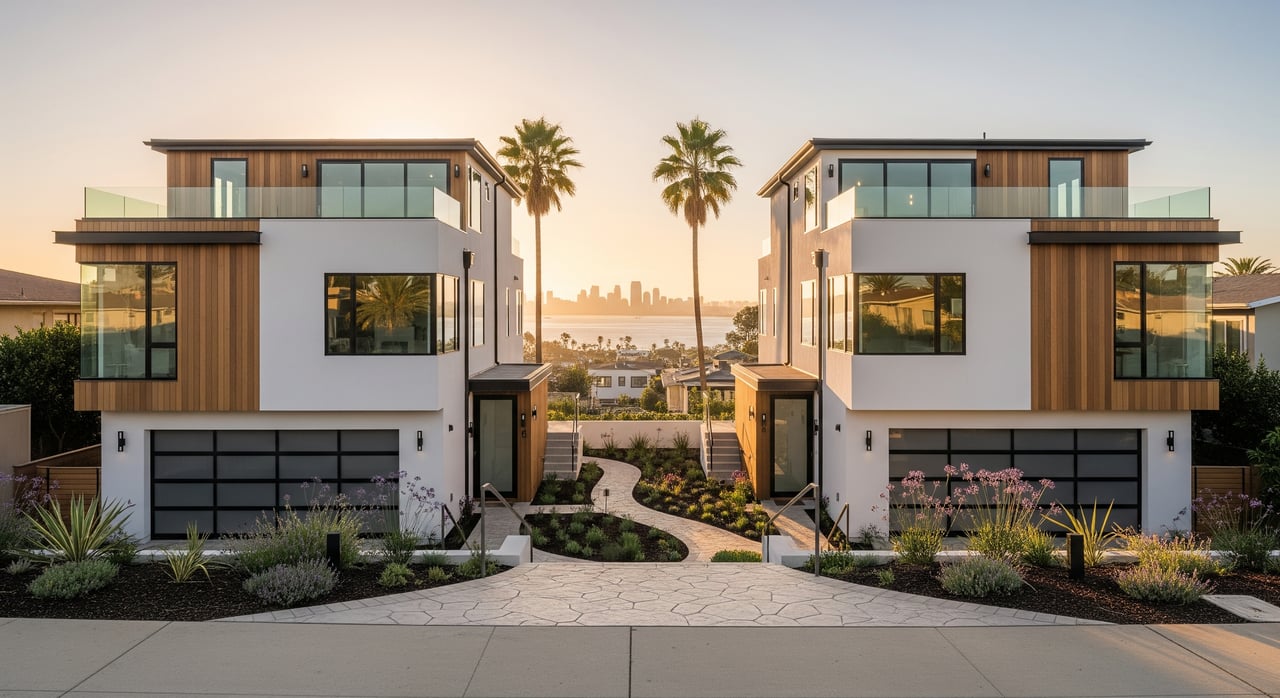
Thinking about splitting your Bay Park lot or adding a second home under SB 9? If you own near Mission Bay, you have a rare opportunity, but the path is not automatic. Between coastal rules, older utilities, and lender or HOA hurdles, the details matter. In this guide, you will learn what SB 9 allows, how it applies in Bay Park, the step-by-step process, and the common pitfalls to avoid so you can make a confident plan. Let’s dive in.
What SB 9 allows in Bay Park
SB 9 created two key paths on single-family lots, processed ministerially when you meet objective standards:
- Duplex provision: Up to two dwelling units on a lot zoned for single-family use.
- Lot split provision: A one-time ministerial split of an eligible single-family lot into two separate lots.
In the best case, you can split a qualifying lot into two and build a duplex on each, which could yield up to four units. In practice, physical constraints, city standards, coastal overlays, lender consent, and HOA rules often limit the outcome.
Projects that meet SB 9 and local objective standards are typically processed ministerially and are generally exempt from CEQA. Cities, including San Diego, can require objective standards such as setbacks, height, lot coverage, FAR, landscaping, permeable area, and parking. Resulting parcels must follow SB 9 dimensions, including the 40 percent minimum size for each new lot and a commonly cited minimum of 1,200 square feet. Always confirm the current numeric thresholds and objective standards with the City before you move forward.
Some parcels are disqualified. Properties with historic designations, certain hazard or resource constraints, recorded conservation easements, or governed by affordable housing covenants may be ineligible. Owner-occupancy requirements and related provisions have been the subject of legal changes, so check the most recent guidance for San Diego.
Quick Bay Park eligibility checklist
Use this at the kitchen table to gauge initial feasibility before spending money on plans:
- Zoning and land use: Is your lot zoned single-family where SB 9’s two-unit and lot-split provisions apply?
- Overlays: Are you in a Coastal Overlay area, a historic district, a floodplain, a very high fire severity zone, or an environmentally sensitive area?
- Parcel history: Has the lot been split recently, or created by a subdivision within a statutory look-back period? SB 9 is a one-time split on the original parcel.
- Covenants: Any recorded deed restrictions or conservation easements that limit additional units or subdivision?
- HOA: Do CC&Rs prohibit subdivisions or new construction? Private covenants can block SB 9 even if the City would approve.
- Lender consent: Does your mortgage require lender approval to split or add units? Many loans do.
- Lot math: Does the split yield two parcels that each meet the 40 percent rule and the minimum area commonly cited as 1,200 square feet?
- Access and frontage: Do both new parcels have required frontage on a public road and meet access standards?
- Utilities: Are sewer and water connections available and sized to support new units? Older neighborhoods sometimes need upgrades.
- Parking: Can you meet objective on-site parking rules where required, especially on smaller or irregular lots?
- Title and easements: Any utility or access easements that constrain a split or unit placement?
If you can answer these questions with confidence, you are ready for a pre-application conversation with the City.
Bay Park constraints to watch
Bay Park is inside the City of San Diego, and local context matters.
- Coastal Overlay and CDP: Areas near Mission Bay can fall within coastal jurisdiction. Some projects may require a Coastal Development Permit, which adds steps and time.
- Flood risk and sea-level considerations: Low-lying sites near the bay may trigger floodplain standards, elevation requirements, or special studies.
- Small and irregular lots: Parcel shapes and setbacks can limit where you place new units or how you draw a split line.
- Aging utilities: Sewer laterals and water lines may need upgrades or new connections, which can impact feasibility and cost.
- Parking: Objective parking rules can constrain designs, especially where on-site spaces are required.
- Historic resources: Designated historic homes or districts can disqualify SB 9.
- Private restrictions: HOA CC&Rs may bar subdivision or multi-unit development even when the City would approve.
Your step-by-step path in San Diego
1) Preliminary feasibility
Before you pay for full plans, aim to de-risk the big items.
- Confirm eligibility: Check zoning and any overlays that apply to your address. Note any floodplain, hillside, or environmentally sensitive areas.
- Gather parcel facts: Verify lot size, shape, and frontage; sketch a potential split line that respects the 40 percent rule and minimum area.
- Review title: Order a current title report to identify easements, deed restrictions, or covenants that could limit your options.
- Call your lender: Ask about consent requirements for subdivision and additional units. Get their process and typical timeline in writing.
- Check HOA rules: If applicable, review CC&Rs for restrictions on splitting or adding units.
- Walk utilities: Identify sewer lateral locations, water meters, and potential tie-in points. Budget for upgrades if needed.
2) Prepare for the City pre-application
A short pre-application check can save months later.
- Hire a surveyor: You will need a boundary and topographic survey for a parcel map and accurate site planning.
- Draft a simple site plan: Show existing structures, setbacks, easements, the proposed split, access, and conceptual unit footprints.
- Collect reports: Have your title report handy. If you know you are in a floodplain or coastal area, note that for the City.
- Book a pre-application meeting: Ask for the SB 9 objective standards checklist, the ministerial parcel map steps, and any coastal triggers.
3) File applications
Expect multiple, parallel tracks.
- Ministerial parcel map: Submit the SB 9 lot split application to create two legal parcels. Provide the survey, title documentation, and required exhibits.
- Two-unit development permit or building permits: For duplexes or new units on each lot, apply under SB 9’s ministerial process using the City’s objective standards.
- Utilities and public works: Coordinate sewer and water connections, and any required street or frontage improvements.
- Coastal steps if needed: If your site is in a coastal area that requires it, apply for a Coastal Development Permit. This can affect timing and sequencing.
- Construction permits: After approvals, proceed with building permits, inspections, and final occupancy sign-offs.
4) Timing and costs
Ministerial review is faster than discretionary review, but it is not instant.
- Timeline: With a complete submittal, approvals may take weeks to a few months. Coastal permits, title issues, or lender consent can extend timelines by months.
- Cost categories to plan for:
- City application and processing fees for the parcel map and building permits.
- Survey, title, and legal documentation for the subdivision map.
- Architectural and engineering design, including civil and geotechnical if required.
- Utility connections and potential street or frontage improvements.
- Impact and development fees as applicable to new units.
- Construction, new assessments by the County Assessor, and any mortgage adjustments.
Common pitfalls and how to avoid them
- Assuming SB 9 is automatic: Do a pre-application eligibility check with the City and confirm overlays and private covenants early.
- Lender consent surprises: Contact your mortgage holder before design work. If they refuse, consider legal advice on your options.
- HOA restrictions: Review CC&Rs at the start. If prohibited, plan for an alternate strategy.
- Coastal and flood hurdles: Check coastal and floodplain maps early. If you need a CDP or special design, build that into your schedule and budget.
- Objective standards miss: Design precisely to the City’s published setbacks, heights, coverage, and parking. A small miss can cause denial.
- Utility blind spots: Verify sewer laterals, water service, and capacity. Upgrades can change feasibility.
SB 9 and ADUs in Bay Park
Accessory dwelling units are governed by separate state laws. In some cases, owners combine ADUs with SB 9 units, but cumulative unit counts, parking, and objective standards can cap what fits on your site. If you are exploring both, coordinate early with City planners and your design team so your layout, parking, and utilities work across all units.
Next steps for Bay Park owners
If you are serious about an SB 9 split or duplex, a clear sequence helps you move quickly without missteps.
- Verify zoning, overlays, parcel size, and recent subdivision history.
- Order a survey and a current title report.
- Contact your lender and, if relevant, your HOA for written guidance on consent.
- Schedule a City pre-application to review SB 9 objective standards and coastal or flood triggers.
- Build a simple test-fit plan that meets setbacks, height, lot coverage, and parking.
- Price utilities and potential street improvements alongside design.
If you want experienced local guidance on feasibility, design tradeoffs, and market outcomes for Bay Park properties, the Chris Love Team can help you evaluate options and coordinate next steps with trusted local professionals.
FAQs
How many units can SB 9 allow on a Bay Park lot?
- Up to two units per lot and a one-time lot split may be possible, which could yield up to four units, but local standards, site constraints, lenders, HOAs, and utilities often reduce the final count.
Do I need to live on the property to use SB 9 in San Diego?
- Owner-occupancy provisions have changed over time and have been subject to legal challenges, so verify the most current state and City guidance before you proceed.
Does SB 9 trigger CEQA review for Bay Park projects?
- SB 9 projects that meet statutory criteria and objective standards are generally exempt from CEQA, though you should confirm local implementation and any other triggers.
Can I use SB 9 if my Bay Park lot is near Mission Bay or in a flood zone?
- Possibly, but coastal and floodplain rules can add design requirements or additional permits, so check maps and discuss standards with City staff early.
Can I combine SB 9 units with ADUs on my Bay Park property?
- Sometimes, but cumulative unit limits, parking, and objective standards will control what fits, so confirm the combined path with City planners.
Will my property taxes increase after an SB 9 lot split?
- New parcels or new construction typically trigger reassessment by the County Assessor, so plan for higher property taxes on the new lots or units.
How long do SB 9 approvals usually take in San Diego?
- Ministerial reviews can take weeks to a few months when submittals are complete, while coastal permits or lender and title issues can extend timelines by several months.